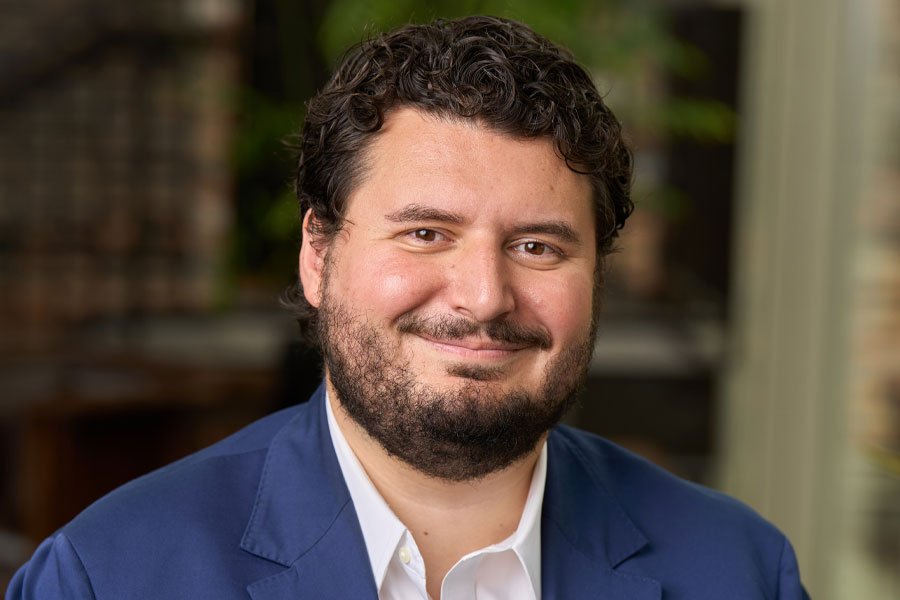
CenterState CEO President Rob Simpson's Remarks at the 2021 Annual Meeting
发表于 |
Image
|
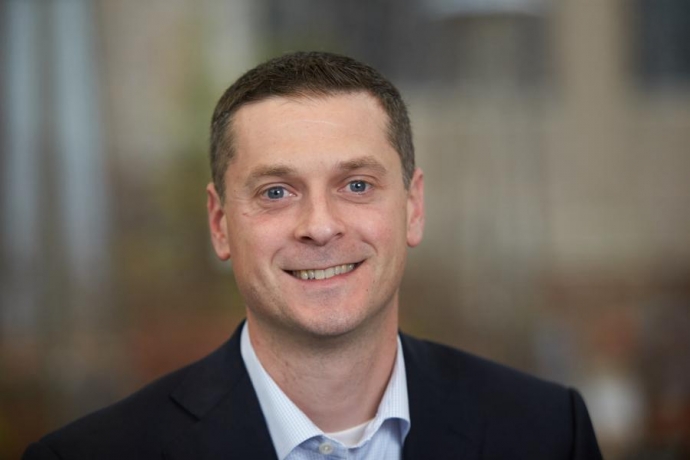
Remarks by Robert M. Simpson
CenterState CEO 2021 Annual Meeting
“Commit to Going Further”
April 29, 2021
I don’t know about you, but I miss the excitement of Annual Meeting day, with 1,200 people in the Oncenter, a chance to see friends and colleagues, to share good news, and a chance to celebrate another year of success and perseverance for the Central New York economy.
But just because we can’t be together doesn’t mean we can’t bring the positive energy, share stories of accomplishments and offer each other support. It is these things that make our community so special, and this year, more so than any other year, I am grateful for the friendships, solidarity and spirit of this place. Thank you for what each of you bring to this work.
Thank you also to my colleagues at CenterState CEO. Every year I say how proud I am of this team. But this year – after watching them lead through the most challenging personal and professional circumstances imaginable – I am not just proud of, but truly awestruck by, the talented group that we have assembled to serve as your ambassadors. They are, hands down, the most talented, committed and passionate team that I have ever had the privilege to work with. They have risen above every obstacle and never once lost sight of why we do the work we do. You picked each other up. Worked tirelessly. And showed a profound humanity to our members who needed us more than ever. Thanks to each and every one of you.
To our Board Chair Melanie Littlejohn, there are not enough words to express my deep gratitude for your friendship, leadership and steady guidance, particularly in this past year. It was not an easy one for me. You made it easier. Thank you.
And a final thank you to my wife Corinne, who is my partner in all things life. You are my rock.
Our theme today is Commit – progress through purpose-driven leadership. When I first talked to Aisha and shared that theme, she was quick to ask: ”What exactly did we want our audience to commit to? What were our goals and what did we want all of you to take away from today’s event?”
You just heard her talk about how Audible has made commitment to its community core to everything it does - creating opportunity for people and businesses. And this is also our challenge for you. That is to say, when we speak of creating a place where businesses thrive and all people prosper, we’re asking you to lean into the role that your business or organization can play in contributing to that vision.
It’s not an exaggeration to say that this past year has tested our individual and collective resolve personally, and professionally. We have seen friends and family stricken with, and fall victim to, this virus. Businesses have had to make hard choices, including to furlough or lay off employees. Many small service businesses have closed for good. So many of our neighbors lost their jobs. And many parents, lucky enough to have a job, have had to manage supporting their child’s education while maintaining a full workload.
Yet, when I think about the toll and stress that we have all felt during this pandemic, I’m quickly reminded of the ways in which we rose to meet those challenges together. Neighbors helping neighbors. Companies supporting other small businesses. Nonprofits stepping up to provide critical services.
Now, thanks to the remarkable scientific innovation surrounding testing and vaccines; courageous and honest leadership from our local elected officials; and the many sacrifices we have all made in the name of public health; we can begin to envision what comes next for our community. 2021 is bringing with it renewed energy for a brighter future, and new signs of progress each day.
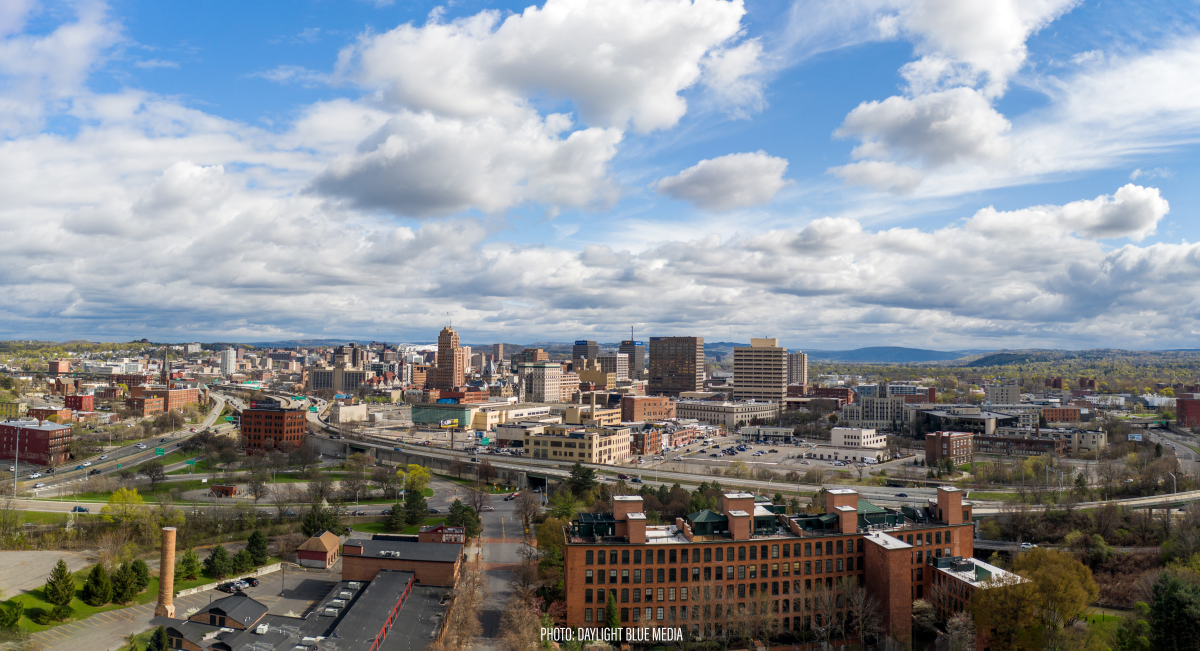
Walking around our downtown areas, be that in Oswego or Syracuse, our streets are beginning to fill back up. I hear more optimism from our members and community leaders about what the future holds. And the signs of economic recovery surround us – declining unemployment rates, the soaring costs of construction materials and a growing wave of new investment that our region’s businesses are planning or considering.
In fact, as hard as this might be to believe, here we stand in April of 2021, just 13 months removed from the single greatest shock to our economic system any of us can remember, and our business development pipeline – the number of companies talking to us about projects to invest, expand and create new jobs – is even more robust than it was in February of 2020 when we were celebrating our region’s strongest economic performance in nearly 40 years.
Projects that were breaking ground then – Salt City Market, Amazon and JMA Wireless – are creating jobs and contributing to our economic recovery today. SAAB and Lockheed Martin each recently landed significant contracts that will create jobs for Central New York long into the future. And our innovation ecosystem – once left for dead - continues to thrive with news that Density - the anchor tenant of The Tech Garden - just raised an additional $25 million bringing their total lifetime capital raise to over $100 million. For a startup company, started right here in Syracuse.
These indicators of progress feel particularly rewarding on the heels of the past year, and we should embrace the renewed forward momentum of our economy. They are an important reminder that our long-term vision and strategy for this region, and our data-driven approach, are still sound. The collaborations amongst our community leadership – bonds of trust, civility and transparency that could easily have frayed under the weight of this crisis - are, in fact, stronger than ever. And our shared desire to transform this region to achieve more equitable and lasting prosperity is not just formidable, but in fact deeply rooted in our community psyche.
So here we are, rounding a corner in our fight against this vicious pandemic, regaining our economic stride and standing at the edge of what may turn out to be one of the greatest periods of economic opportunity of our lifetime. State and federal investments -- coupled with pent up consumer energy, mobility and demand -- afford us a unique combination of accelerants which can propel us forward at a record pace.
First, federal and state investments are putting unprecedented stimulus behind our economic recovery. Beyond the $1.9 trillion American Rescue Plan, there is talk in Washington of an infrastructure bill that could approach another $2 trillion in government investments in roads, bridges, water and sewer, ports, rail and broadband to rebuild our aging infrastructure and invest in future competitiveness.
At the State level, this year’s New York State budget included more than $800 million to support the replacement to I-81 in Syracuse, with construction anticipated to start as soon as 2022. This milestone could not come at a better time for our community. The Community Grid becoming reality will mean a more than $2 billion infrastructure investment in our city and region.
Major infrastructure investments like these bring the promise of new spending and new jobs to our community, not to mention a completely re-envisioned downtown and a new relationship between our Downtown, the South Side and University Hill.
But history has shown us time and time again that while economic growth is a necessary precondition to increased prosperity, growth alone does not guarantee a greater level of access, opportunity and economic equity.
Which is why we are working proactively with the City and County on Syracuse Build, to ensure that talent from this community is prepared for the jobs that will be created by these investments.
And we are tracking a proposal in President Biden’s infrastructure plan that would provide $20 billion for the specific purpose of reconnecting neighborhoods torn apart by past infrastructure decisions, such as our 15th Ward. Programs like these can help us realize the full potential of our vision for a new Community Grid, and ensure that new development triggered by this investment thinks holistically and equitably about access, jobs, housing and creating safe, walkable communities.
Second, not a day goes by where I don’t find myself engaged in a conversation with a business or community member about migration to places like Central New York from other cities. This anecdotal evidence tracks to data we are following from the Good Life CNY, which has been visited by more than 156,000 unique users since its launch in late 2019, mostly from places like New York City, Philadelphia, Boston, Washington D.C, and Detroit.
The most recent United States Postal Service change of address form data confirms what we have all believed to be happening – we are gaining more residents than we have lost. In fact, movers to Syracuse from the New York City Metro region increased nearly 70% in 2020, one of several trends that have driven a one-year change in median home prices up 17.2%.
Upstate New York is becoming a sought-after destination for its affordable, attractive and less dense alternative to the major metropolitan areas that have soaked up people, jobs and capital investment for the last five decades. And word is getting out. Two weeks ago, Business Insider ranked Syracuse 3rd in its list of best cities in the Northeast to live after the coronavirus, ahead of places like Pittsburgh, Pennsylvania and Burlington, Vermont.
We are facing a confluence of unique and unprecedented opportunities. And yet we also have a responsibility to acknowledge that the past year has laid bare, and in some cases reinforced, the massive socio-economic inequalities that we know hold our region back from our full potential.
These inequalities are most obvious when you look at the unemployment data and the uneven economic recovery. Since October, more than 10,000 people have returned to the workforce in the Syracuse MSA. Employment has slowly returned to pre-pandemic levels in several industries, including professional and business services, transportation and warehouse, and even retail trade.
Yet other sectors, including accommodation, food service, leisure and hospitality, all continue to lag far behind pre-pandemic employment. Over the last 12 months, 32 out of 100 jobs in the hospitality industry and 28 out of 100 jobs in accommodations and food service had not returned in the Syracuse MSA. In fact, many of the low-wage workers in these industries have not seen a return to employment in the way that middle and high wage workers have. In Onondaga County, for example, employment for low-wage workers has decreased by over 36% during the pandemic. That is devastating.
Another glaring disparity highlighted by the pandemic is the fact that women, particularly women of color, lost their jobs at a much higher rate during this crisis and are returning to the workforce far more slowly. In a year where 9.8 million jobs were lost, women accounted for 55% of that loss. This was due, in part, to significant job losses in female dominated sectors like education and retail. And we know that women disproportionately stepped up to fill the gap in child care and education for their families.
Job losses were felt most significantly among Latinas who had the highest unemployment rate, at 9.1%, followed by Black women at 8.4%, compared to white men with an unemployment rate of 5.4%. In December alone, 154,000 Black women nationwide left the labor force.
Now, layer these statistics against a backdrop of widespread and prevalent racial injustice. The murder of George Floyd brought this visceral experience in to each and every one of our homes during the past year.
Many have been moved to action by what they saw, and there has been greater and more widespread support for social and racial justice movements than perhaps at any point in our nation’s history. But for those of us who seek to support our brothers and sisters who are people of color, remember this. The trauma that we experienced watching the callous killing of a man in Minneapolis is a trauma that our minority community lives with every day. Fear, anxiety, oppression, dehumanization, inequity and intolerance. Injustice. And, sadly, it is a trauma that they still experience, even after a guilty verdict in a trial.
So while I can tell you, unequivocally, about all of the signs of progress and that the economy is roaring back, I can also say, with equal conviction, that just getting back to where we were, pre-pandemic, cannot be a sufficient aspiration. There is so much more that is needed if we are to truly fulfill our promise to each other to be a community that embraces prosperity for all.
I was recently asked by a reporter for The Washington Post about how an organization like ours comes to be engaged in work like Economic Inclusion or Racial Equity. “These aren’t issues that the typical Chamber of Commerce engages with,” he said. And I reminded him, we are not a typical Chamber of Commerce.
But beyond that, look at the data. Expectations of corporate leaders are changing. In a new report by Morning Consult, 69% of respondents said how a CEO responds or expresses themselves on social issues like Black Lives Matter will permanently affect their decision to buy from that company. Likewise, 67% said how a business reacts to social issues will permanently affect their decision to buy from that company. Beyond reactions, 66% of respondents also wanted the boards of companies to be more diverse. And notably, 83% said while they appreciate CEOs’ public statements about important social issues, it will ultimately be their actions that will affect their opinion of a company.
Businesses are no longer being allowed to sit on the sidelines on issues of racial justice and social impact. Rather, consumers are utilizing their market power to bring accountability to the boardroom in ways that have previously been reserved for our elected officials. Just look at the corporate reaction to the racial justice movements of last summer, or to the voting rights debate in Georgia more recently. The landscape in which business operates is changing, and forward-thinking business leaders must change with it. As an organization, CenterState CEO is well positioned to help you navigate and find your space within this new reality.
When a company is looking to grow or invest in this community, we can help you explore real estate options in distressed communities to maximize the social impact of your investment.
Our Work Train team can help you connect with training opportunities and community-based organizations that work with marginalized populations so that your workforce can better reflect the community in which you operate.
When it comes to equity and inclusion in the workplace, we created our newest division focused on Racial Equity and Social Impact to respond specifically to the expressed needs and interests of the business community for greater resources and training on how to create more welcoming workplaces and a more equitable community.
Each year, I come before you at this event with a call to drive change and progress in our city and region. And I understand that can seem daunting. The challenges often feel beyond the control of any one individual, employer or community organization. But I assure you there are real, tangible efforts you can take. And as you heard from Aisha, the return on your commitment of time, energy and resources is exponential.
Moreover, as leaders, this is what we are called to do: lead. As Abraham Lincoln once said, “You cannot escape the responsibility of tomorrow by evading it today.”
I am asking you to lean in. You can demonstrate your commitment to this work by following the path that others have created. Take, for example, Vicki Brackens, who decided to move her company, Brackens Financial Solutions Network, to the Salina First project on South Salina Street in the Syracuse Surge footprint. By doing so, she is not only creating the space she needs to expand her company, she is catalyzing other investments in a neighborhood that needs it.
If you aren’t in a position to expand your local operations, you can commit to being more targeted in your purchasing and procurement. Determine how much business you are doing locally, and with women and minority-owned vendors and suppliers. Then commit to increasing that share by some fraction every year for the next five years. In partnership with the Upstate Minority Economic Alliance, we can help connect you to the suppliers you need to make that effort successful.
When you shop for yourselves or your families, buy from businesses run by women and minorities which, as we know, are the small-business owners most impacted by the COVID-19 economic crisis.
One thing every business owner can do today is take our Business Equity Pledge. Issues of racism impact us all but our colleagues and employees of color most acutely. For them to thrive, they need to feel supported and seen. And while I know leaning into these issues can feel difficult, even dangerous for fear of saying or doing the wrong thing, I assure you that being a little vulnerable and committing yourself to better understanding the complex issues at play is far less dangerous than doing nothing. We have an incredible resource in Dr. Juhanna Rogers, who is already working with dozens of regional employers to help them create more welcoming and inclusive workplaces.
You can also encourage your employees to volunteer their time – even during business hours - to community initiatives or organizations by visiting the United Way’s volunteer portal – www.VolunteerCNY.org.
I encourage you to think about the role your business or organization can play to reverse the extreme gender inequities that have been highlighted by this crisis. First, when you see a woman with a gap on her resume because she took time off to support her family at home don’t ask her about it, hire her. And as a proud and engaged father myself, let’s normalize giving working dads adjusted schedules or flex-time to take on child care duties too.
Can you open your doors once a year to high school students or guidance counselors so they can get a better idea about what you do, and learn about the vast array of career opportunities in the community? You have the power to help connect our youth to high-quality internships and jobs. Stay connected to our regional colleges and resources like Lemoyne's ERIE 21 program, and On Point for College to engage and mentor student talent. Contact CNY Works to learn how to participate in the City of Syracuse and Onondaga County’s 2021 Summer Youth Employment Program, and host one or more young adults this summer to provide them with meaningful summer work experiences.
Make sure those in-movers mentioned earlier - our newest community members - are connected to others professionally in our community. Reach out and be a welcoming neighbor. Be an advocate and champion of this community.
These are just a few tangible examples of how to make that big goal – driving positive change and progress in our community – just a little bit more manageable. Pick one. Or more. Write it down. Set a goal. The key is to commit to action.
Because whether we are talking about the centuries long fight for racial equity or our decades long efforts to transform our region’s economy, the principle is the same. We cannot fill the well, as the saying goes, if we aren’t all committed to filling our own buckets and pouring them in.
My son, Ben, turned nine a week ago. For those of you who have participated in this event before, you have had a front row seat to his childhood. To the lessons he teaches me. And to the insights parenthood affords me in to the human dimension of our work. Much to my great delight, and sometimes to my trepidation, Ben has fallen in love with mountain biking, a passion of mine. He started riding trails in the Adirondacks with me when he was 5, but it wasn’t until this last year that his physical abilities caught up with his interests. And if there are two things you gain an appreciation for watching your only child charge fearlessly down a mountain over roots and rocks – it is protective gear and physics.
The laws of physics are basic and fundamental principles of life as we know it. And there is one that is most relevant here today. Inertia.
An object in motion will stay in motion. An object at rest will stay at rest. Friends, left to their own devices, current conditions will not change. The only thing that can overcome inertia is the application of an unbalanced force.
Each of you has tools, skills and resources that you can bring to bear in support of our vision to be a place where business thrives and all people prosper. You are all leaders in this community. Which comes with a responsibility to lead. Without commitment there is no disruption. Without disruption there is status quo. Inertia. And that cannot be our aspiration nor our legacy.
Please join us today in committing to taking action. To doing more. To leaning in. And together, we can be that unbalanced force for this community.
Thank you.
其他
首席执行官新闻