Read President Rob M. Simpson's 2026 Annual Meeting Remarks
Posted On |
Image

|
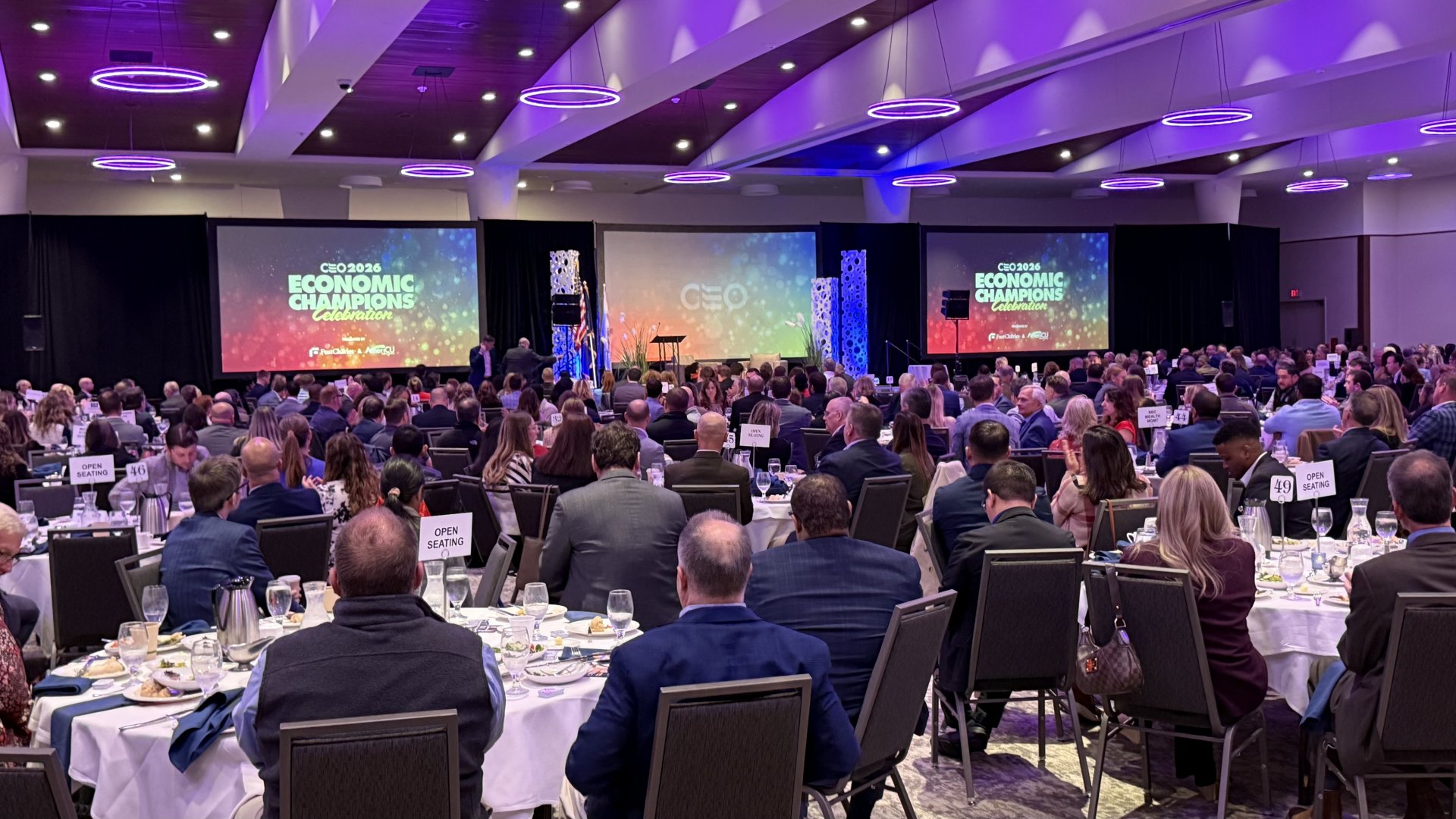
There are moments in life that demand your complete, unwavering attention. This is one of those moments. Not just here, today, in this room. But this month. This year. This era in Central New York.
Because everything has already changed.
And what we do next matters more than what we have done to this point.
You heard it from Manish. Micron operates in one of the most competitive, demanding markets in the world. Capacity needs to scale. Efficiency matters. Choreography is key. And there are no guarantees, only the need for continual performance.
By extension, Central New York is now operating in the same environment.
For years, we have worked to reinsert Central New York into the global value stream. We studied the data. Built the vision. Aligned institutions. And now, we’re in the current of an entirely new tier of economic system.
One that matters deeply to all of us in this room and to our neighbors across the region. But one that is also increasingly synonymous with our country’s economic competitiveness and national security. No surprise, then, that the rules are different here, and so are the stakes.
Just think about the progression up the economic value chain that we have experienced in the last decade alone.
Ten years ago, we were celebrating significant accomplishments borne from deep, collective effort. The resurgence of our downtown. Growing excitement and success from our innovation economy. And the first signs of regional population growth in 70 years.
We landed our first headquarters deal when Saab chose Syracuse to be the home for their North American business, bringing with it hundreds of new jobs.
The Upstate Revitalization Initiative – a $500 million capital infusion from the State of New York that we competed for and won – served as a needed catalyst for our ambitions and fuel for the growth of our world-leading capabilities in unmanned aerial systems and advanced air mobility, among others.
Within a few short years, Amazon made a $350 million investment in their fulfillment center in Clay, at the time the largest job-creating investment this region had seen in decades. Today, Amazon employs 4,400 of our region’s residents.
And yet here we are, welcoming Manish Bhatia to the stage to discuss Micron’s historic investment in our region and preparing for a shock to our economic system unlike anything that is occurring anywhere in the United States of America.
This is not a linear path we are on. This is not incremental growth. The question before us is no longer whether Central New York can regain global relevance. Here we are. We’ve arrived.
The new question is whether we can operate at the level this moment demands.
At this level of economic competitiveness, successful regions, just like successful companies, must adapt relentlessly. And there are important lessons that we can learn from Micron and other companies that have been operating in this globally competitive landscape for some time.
So let’s talk about four rules that we can borrow and apply to this moment.
Rule One: Capacity must scale at the pace of opportunity.
In the semiconductor industry, there is a governing expectation, first proposed in 1965, known as Moore’s Law. It has held that computing power, measured in transistor density, doubles roughly every two years. Not because it’s easy, but because the growing need for computing demands it.
Really think about that – a doubling of transistor density and compute power every two years. It means that a chip today has more than 1 billion times the transistor density than one built in 1965.
That is the system Micron operates in: constant scaling, constant pressure, no pause.
Our region is facing similar demands, except our constraints aren’t silicon. They are workforce pipelines, housing, infrastructure like our roads and airport; and critical civic organizations that must remain nimble while scaling at the pace of opportunity.
Take workforce, which has been the product of deep community engagement, investment and collaboration for years – work rooted in the need to move more of our region’s residents into productive, wealth-generating employment and reduce the socioeconomic disparities that have plagued our communities for so long.
Since its launch in 2021, Syracuse’s Pathways to Apprenticeship, Syracuse Build’s signature program, has placed 201 of our neighbors into careers in construction and the trades across nine cohorts, in particular women and people of color.
Yet Micron’s daily construction employment demand alone will scale from 200 workers today to more than 4,100 by next year.
Even as we replicate and expand the program to more counties, including Oswego, Tompkins and in the Mohawk Valley, demand is accelerating faster than supply.
Likewise, consider ONRAMP, Governor Hochul’s flagship program to create both access and opportunity for our region’s residents. Less than one year into implementation, ONRAMP will have trained 160 local residents for in-demand advanced manufacturing, building trades and construction jobs in its first year.
But the waiting list for participants already exceeds 600. We need more scale to fully realize the hope and economic potential of this moment.
Our housing market is no different.
Vacancy rates sit at 3%, compared to a healthy housing market which typically shows vacancy in the range of 5%. As a result, home prices and rents are rising faster than at any point in recent history, exacerbating a crisis of access and affordability.
To scale at the pace of opportunity, we need between 16,000 to 19,000 new housing units by 2030 – that’s up to 3,800 units per year. Yet, across the 6-county region, only 2,385 permitted units were authorized in 2025.
This disconnect represents a major constraint on our ability to accommodate the growth we are experiencing as well as a critical reminder of the human impact that growth will have on our region’s residents.
But there are signs that the supply response is beginning to match the demand curve. CenterState CEO’s Housing Dashboard is currently tracking 92 housing projects representing nearly 14,000 units and $5.2 billion in total investment.
Which is why CenterState CEO helped launch. The Housing CNY Fund, an unprecedented $150 million public and private collaboration that is the largest of its kind in New York State. This Fund alone is expected to help finance as many as 3,000 new housing units over the next several years, with nine projects already in review less than 40 days since its launch.
These are not isolated pressures. They are signals that the pace of opportunity has already outstripped the pace of our systems. Workforce and housing density are now rate limiting factors just like transistors are for microchips.
But working together, partners in government and the private sector have chosen to collaborate and unite around bold, market-driven solutions to complex and pressing challenges. More of that is needed.
Rule Two: Friction is failure.
In high-performance systems, small inefficiencies compound. A delay, a bottleneck, a missed connection and the system doesn’t just slow, it loses rhythm.
Consider the extreme tolerances required for Micron’s processes, where chips are built layer by layer using deposition and photolithography. For a single wafer to perform at its optimal output, it requires as many as 1,500 individual process steps with upwards of 50 to 100 layers added to every wafer, each one requiring precise positioning.
Even the smallest variability or imperfection can result in overlay misalignment. A few nanometers off and one billion plus transistors don’t just slow down and work less efficiently, they simply don’t connect. It doesn’t work. The chip is dead.
Now apply that same principle to a single example of doing business in Central New York. Pick any project that you are familiar with. Something you’ve sought to do for your business, or large projects that we have all watched move through the various stages of ideation, pre-development, planning, construction and operation.
Is there anyone in this room that wants to argue that we are operating at the same level of rigor, predictability and repeatability that defines the most successful companies and economies in the world?
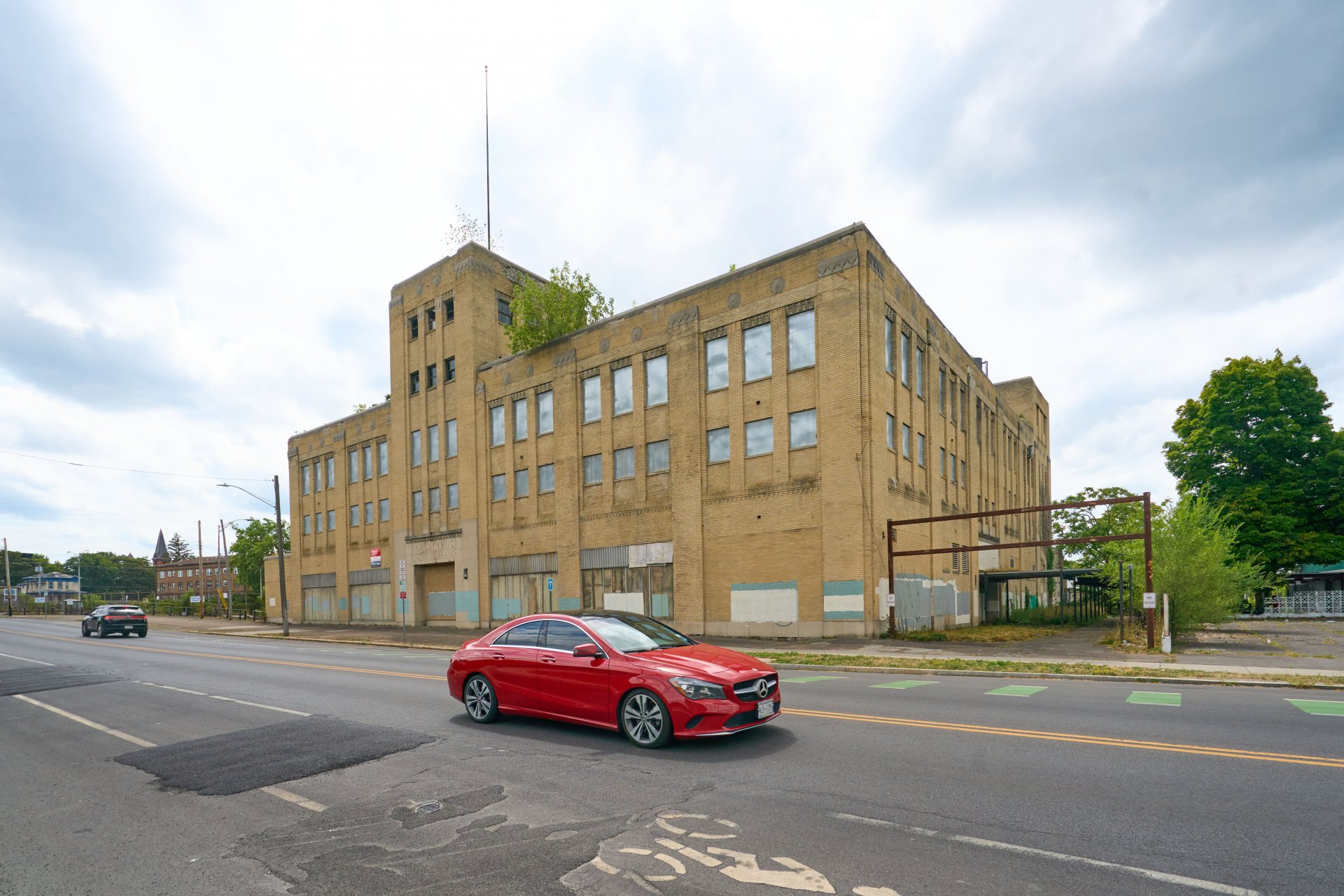
Zoning reviews. Wetlands regulations. SEQRA. Electrical connections. Substation upgrades. Construction permits. Certificates of occupancy. Are we operating in total alignment? Is the work of building and developing our region happening with predictable sequencing? Or are we adding inefficiency and cost to our system at every step, be it mega projects like Micron or smaller projects like Salina First, the Sears Building or a new hotel in Fulton that are striving to bring investment to communities that both need and deserve it.
To grow, we must attract investment dollars that are, themselves, chasing the best return. Delays, inconsistent regulatory guidance, friction – at best they erode momentum and at worst they stop investment altogether.
This matters more today than ever because as we work to build out Central New York’s semiconductor cluster we face the reality that many of the partners that are critical to Micron’s future success are international partners with different expectations of how development operates in more centralized economies.
Over the last few years, we have joined the State and County in Taiwan, Japan and other parts of the country as we seek to attract Micron’s key suppliers. The level of uncertainty among international partners considering U.S. locations is high, especially from those partners that have not built in the U.S. before. A lack of familiarity with air permitting and wastewater requirements; labor and environmental regulations; multi-jurisdictional layers of federal, state and local government. And in our case, not just one but often many layers of local government. Each of these creates a point of friction to securing investment.
To be clear, reducing friction does not mean lowering standards. Our standards – which are themselves a reflection on our values – are critical to ensuring that Central New York remains Central New York. But reducing friction does mean increasing predictability, minimizing variation, and aligning partners and stakeholders to deliver excellence at pace.
Back in 2017, CenterState CEO was proud to work with dozens of community partners to identify opportunities to streamline local government and remove cost and inefficiency from our regional systems. The Consensus Commission on Government Modernization offered 50 recommendations to remove friction and position this region for growth. And I get it. No local elected official save one wanted to engage in that conversation seriously.
But now that we have rediscovered our place on the growth curve, we need to be honest with ourselves. We will not attract capital at the scale of our current ambition when returns are diluted by delay and duplication. There are many ways that we can tackle this as a region, but it must be tackled. And CenterState CEO stands willing to work with any partner, public or private, to streamline the process of investing in our region.
Rule Three: Optimization requires choreography.
Inside a semiconductor manufacturing facility, nothing moves independently. Wafer pods zipping overhead. Robots placing those wafers precisely in track. Photoresist chemicals coating at the correct viscosity and speed. Heat applied exactly. Half a billion-dollar lithography tools queued to maximize uptime. If one part moves ahead of the others, the system doesn’t accelerate. It stalls. This dance isn’t just about speed, it’s about synchronization and optimization across tools, robotics, software and humans. That’s choreography.
And that is what is required from us because our challenges are not isolated, they are interconnected.
Workforce cannot scale without housing. Housing cannot scale without infrastructure. Infrastructure investments will not be made without policy alignment. And private capital will wait patiently for the moment when returns can be maximized.
This challenge, then, is not just about what any of us does nor how fast we move. It’s about how well we move together; with clarity, coordination, and a shared commitment to what matters most – creating a region where business thrive and all people prosper.
Even inside a fab, where you can control for as many variables as possible, this is exceptionally difficult. In a regional system like ours, control is an illusion. Which makes coordination and cooperation central to executing at the highest level.
The Future Ready Workforce Innovation Consortium is a regional network of more than 100 partners in industry, education, workforce and community development that have aligned on a vision of building a better ecosystem to support talent and workforce development in Central New York.
Co-led by CenterState CEO and Syracuse University, these partners are working to launch new training programs, develop innovative ways to recruit people into careers, and build deep partnerships with manufacturing employers to meet the moment.
Consider, also, our designation as the only federally funded Tech Hub for semiconductor manufacturing. This coalition of more than 100 organizations across Syracuse, Rochester and Buffalo are advancing dozens of workstreams across the Thruway corridor to re-orient Upstate New York’s deep manufacturing, training and research capabilities to support the growth of the semiconductor industry. Already, partners across the Tech Hub corridor are working with over 400 companies that are, leaning into this opportunity. And the trust that has been built between communities that haven’t historically worked together is at an all-time high.
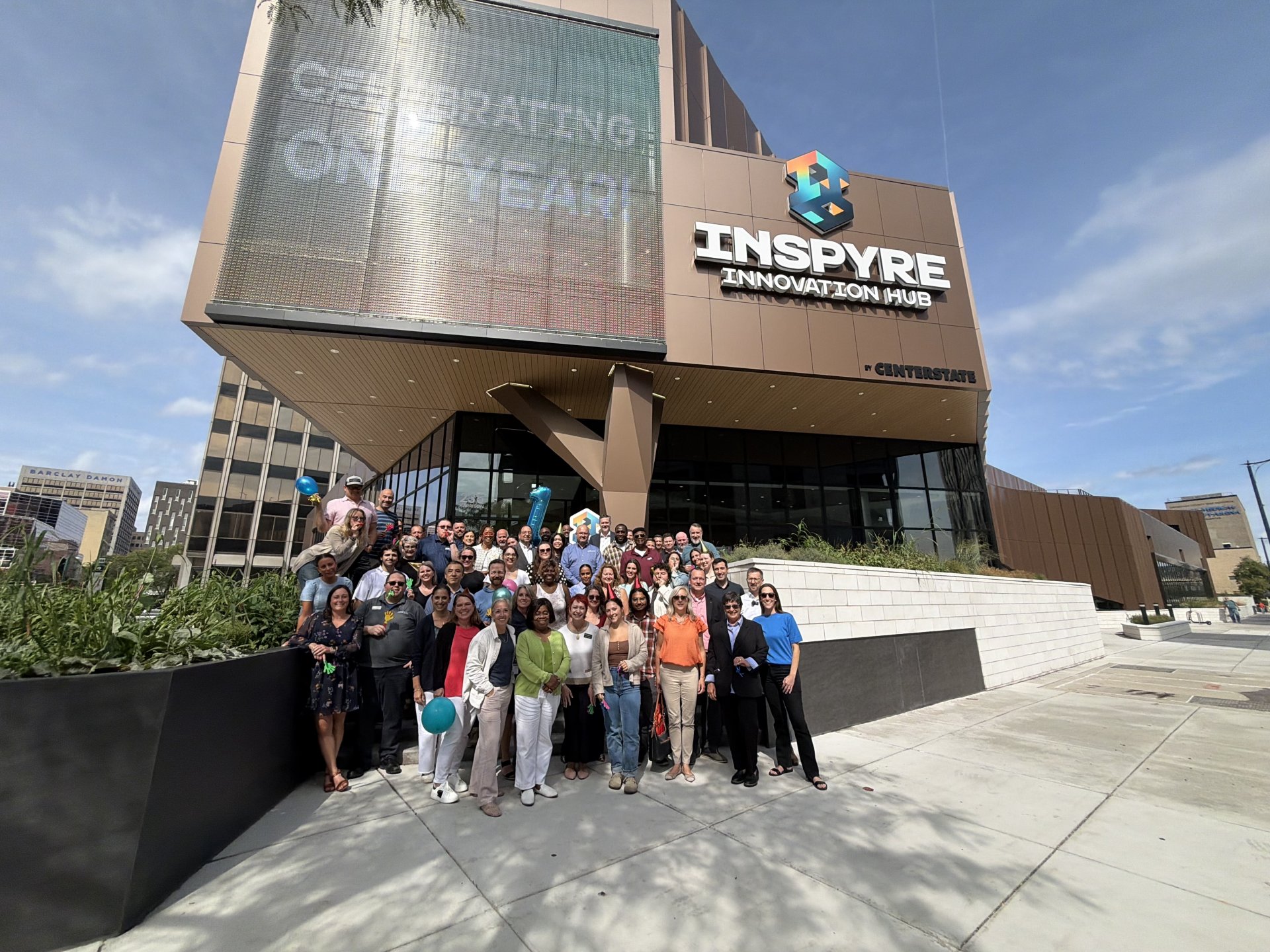
Closer to home, CenterState CEO’s INSPYRE Innovation Hub is also working as a point of coordination and collaboration for our region’s small business ecosystem and innovation economy, creating a physical anchor point for our region’s strategy to start more businesses every year than we lose. In six short months of operation, INSPYRE has hosted more than 75 events and welcomed over 2,800 people into the space – including more than 200 students from across Central New York schools. We’ve filled 35 of our 36 available offices for entrepreneurs and startups. And we’ve launched new programs, accelerators and services designed to meet clients wherever they are in their startup journey – all with the support of dozens of public and private sector partners committed to working with us to ensure its success.
These are not small scale systems that require steering. No single organization can solve these challenges alone. But together, if we commit to a practice of collaborative choreography, we can optimize the impact of this moment for the people that call Upstate New York home.
Rule Four: Performance is visible—and it matters.
The entire purpose of all of this scaling, removing friction and choreography is to create world-class performance. For Micron, that means that an engineer or technician in their control room observes, in real time, how all these coordinated inputs translate in to output.
With each wafer, a yield map identifies the good dies from the failed ones. If performance is tight and controlled on a mature line, yields can reach 95% or higher. If the process drifts, even fractionally, yields drop below 90% and Manish gets nervous. And rightfully so -- that delta translates into millions of dollars in output per day, per tool. It is the difference between profit and loss. On-time delivery to customers, or loss of market share.
Inside the fab, performance is not hidden, it is immediately observable and economically consequential.
The eyes of the world are now on Syracuse and Central New York the same way a quality engineer looks at a wafer. How we perform in this moment is immediately observable. And it is deeply consequential to our economic performance.
People around the region are watching to see if it’s real. Across Upstate, many are looking on with envy. In Albany, they wonder what nine-figure capital request will land on their desk next. Around the country, some competing regions may be waiting for us to fail. Our last two Presidents have been watching. And you can be sure that the leaders of other countries around the world are likely watching also. Waiting to see if this effort at U.S. re-industrialization takes root, or it loses momentum with the fickle nature of American politics.
All of this attention brings expectations and accountability. Given the size of investment that we are asking others to make to unlock this region’s full potential, we must understand that performance will no longer be assumed. It will be observed. And important decisions that will impact our regional trajectory will be made by companies, capitalists and governments alike based on one thing: how we perform on this new playing field.
Of all the lessons we might take away from this moment, this one may require the biggest change from our region’s business and civic leadership.
The tolerance for error is now microscopic.
When something isn’t working, we have to say it — clearly, quickly, and constructively. We convene partners. We advocate for policy. We align capital to need. We solve problems in real time, together.
The economic and human consequences of failing to perform are severe. Growth becomes uneven or is missed. Opportunity concentrates instead of expands. The divide between those who benefit and those who don’t widens.
In pursuit of excellence, our standards and our values must remain. That is what defines us. And that is what makes this moment so uniquely compelling. It’s never just been about growth. It is about proving that growth can be inclusive. That the lives of the people of Central New York can be made better through newfound economic leverage. I believe in my heart they will be.
Likewise, the upside of choreographed excellence is sublime.
Across the country and around the world regions are scrambling to win the same race we are – the chance to build physically small but economically powerful things that are shaping the future of civilization as we know it. To move quickly. To align systems. To deliver complex, transformational projects at speed and at scale. To lead in the next era of the global economy.
That is our choice. That is our call to action. That is our new benchmark.
We know what we are capable of. Now we just need to execute. With urgency. And scale.
Thank You.
Other
CEO News



CEO News | 09/29/2026Future-Proof Your Organization Against Cybersecurity and AI ChallengesHear real stories and solutions from industry experts on rapidly evolving cybersecurity threats, accelerating technology changes and the growing impact of artificial intelligence at the Future-Proof Your Business, Cybersecurity, Technology… |